Not many airports across the globe have raised so much curiosity, speculations, and conspiracy theories as Denver International Airport. Since its inception in 1995, this giant transportation facility has been a subject of numerous theories including one asserting it houses underground bunkhouses to the purported links with shadowy groups. Be it a skeptic, an inquisitive traveler, or someone who is sincerely interested in these mysteries, it is interesting to learn, what is real and what is speculation about Denver Airport Conspiracy, that the place represents a wonderful confluence of architecture, art and modern day mystery.
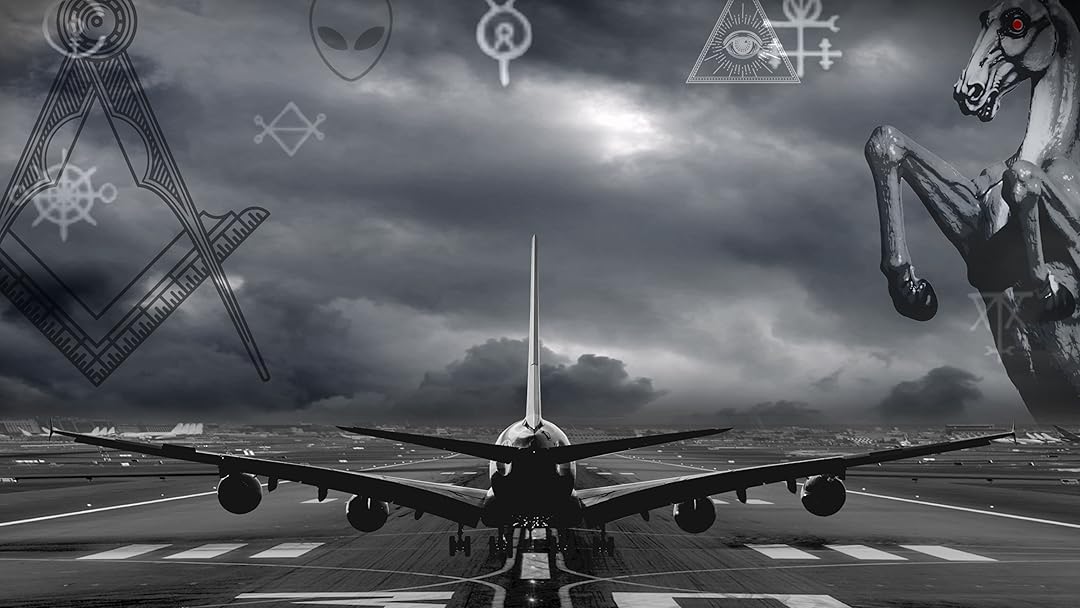
The mystery behind the Denver Airport Conspiracy
Covering an incredible area of 33,531 acres, Denver International Airport, or DIA as it is commonly abbreviated, is the largest airport in North America in land area and the second-largest globally. Its distant site 25 miles west of downtown Denver, its unusual construction history, and its unique design decisions have become the source of many speculations over the decades.
The old Stapleton International Airport was replaced in the airport although the facility of that airport was still functioning well. The project was grossly overbudgeted- it was initially budgeted at 1.7 billion and the actual cost was more than 4.8 billion. There were many stalls and delays in the construction process, and this fact is used as a trap by conspiracy theorists to assert some secret agenda instead of what is more prosaic, a construction problem and change of scope.
The unique tent-shaped roof of the airport that reminds the Rocky Mountains and the history of the Native American teepees, gives the airport a sense of out-of-this-world look, more so when one looks down at it. This unusual structure, coupled with different artistic installations in the terminals, will give visual sustenance to those who will want to find hidden meanings everywhere they look.
Notorious Blue Mustang Sculpture
No one aspect of DIA has spawned as much discourse, however, as the fact that there is a 32-foot-tall fiberglass sculpture of a rearing horse with red glowing eyes at the entrance to the airport, which the visitor can see on his way in. Formally referred to as Blue Mustang, yet referred to as Blucifer by local residents, this piece of art is currently officially known as Blue Mustang, but still has a rather tragic story, which further contributes to its legend.
In 2006, sculptor Luis Jiménez was killed in his studio when part of the piece fell on him cutting an artery. This was done by his family and studio assistants and installed in 2008. The violent look of the sculpture and the red eyes, which in fact, are lit up at night, coupled with the fact that the artist is dead, have prompted some to refer to it as cursed or demonic.
The reality is less sinister. Jiménez was characterized by public art full of color making bold depictions of the Southwestern and Latino culture. The red eyes were to make a Wild West reference and deliver a powerful visual impression. The sculpture is a symbol of the wild west of America but the fiery expression as well as the bright eyes are definitely doing a bad initial impression on many tourists.
Disturbing Murals for Denver Airport Conspiracy
Leo Tanguma is an artist who has created a row of murals, which has caused a massive controversy and speculation, inside the Jeppesen Terminal of the airport. They are paintings that show apocalyptic visions such as the body of children in a coffin, a gas-masked soldier with a sword, burning houses, and extinct animals, later switching to the ones of peace, children of all races, and harmonic relationships with nature.
Conspiracy theorists have understood these murals to be unveiling of a New World Order, limiting population or world disaster. The description is admittedly grim and unsettling, especially in a place where people who travel are supposed to see welcoming and soothing art works.
But the true meaning of the murals has been over and over again clarified even by Tanguma himself. The first one is called In Peace and Harmony with Nature and the second one is called The Children of the World Dream of Peace which is the path that mankind has to pass through war and destruction of the environment to peace and sustainability. The upset pictures represent what we need to get over; the optimistic pictures represent what we are capable of getting. Tanguma, as a Chicano muralist, has made similar works in his career, which dealt with social justice, environmentalism, and peace.
Some of these original murals were subsequently removed by the airport in renovations, but it is still controversial to determine whether it was because of the controversy or merely as a result of updating the facility.
Bunker and Underground Tunnels Theories
The most enduring one indicates that Denver International Airport is located on a mass underground city or a network of bunkhouses that should support government officials and the elite in case of a disaster. According to the theorists, evidence is the large system of underground baggage at an airport, ventilation buildings that are seen on the surface and construction anomalies.
There is indeed a lot of underground infrastructure in the airport. The facility has a state-of-the-art automated baggage handling system which operates below the concourses and terminals and links different parts of the facility. In fact, this system itself was one of the greatest causes of construction delays and overruns- it did not work well even after its opening and the airport had to continue working with manual baggage handling.
There is also the underground train network that carries the passengers between the terminals, which has to have infrastructure that cannot be seen on the ground. Underground there are electrical systems, utility corridors and maintenance areas all of which are found at most major airports.
Beneath all this are there secret levels of bunkhouses? Airport authorities have always refuted such allegations and there is no convincing evidence that there are other facilities outside the recorded infrastructure. Nevertheless, the nature of the so-called secret facilities is that it is impossible to prove something negative, which allows the existence of the theory.
Freemason Connections and Mysterious Capstone
A capstone marker, with the Masonic square and compass insignia, a time capsule inscription and allusions to the New World Airport Commission, appears in the main terminal. This sign has drawn speculations on the involvement of the Freemasons in designing and the mission of the airport.
The truth is less complex. A number of Masons attended the 1994 dedication ceremony of the airport and they erected the capstone which was a customary Masonic tradition of important buildings. The New World Airport Commission is a bad omen but was merely the name that was assigned to the commission that arranged the dedication ceremony- it was not a government or a secret society.
Although Freemasonry is a secret society and its rituals and symbols appear to an outsider as something mystical, it is chiefly a fraternal society that engages in charity activities. The use of Masonic symbols in many public structures, particularly the 19th and early 20th centuries, is due to the fact that Masons were well-known members of the community who attended civic events.
The time capsule can be opened in 2094 and that is why conspiracy theorists have another 100 years to theorize about the contents but it will probably have the common contents of the time capsules newspapers, photographs and messages to future generations.
Nazi Symbolism and Runways Claims
As seen on mapping applications, it can be said that the runways of the airport shape out a swastika. A lot of imagination and selective visualization is needed in this theory as the runways do not actually shape out this when looked at objectively.
DIA contains six runways, which are pinwheeled, so that the traffic may be served in all the directions, and the different wind patterns of Colorado considered. The layout is an aircraft arrangement founded solely on the meteorology and air traffic efficiency, rather than symbolism. This is because there are similar runway patterns at other airports worldwide due to the same practical reasons.
Gurgoyles and Other weird art
The airport also has gurgoyles in suitcases around the baggage claims, which others perceive to be evil or just not fitting a contemporary airport. In fact, these sculptures are a meticulous choice of the airport to accept its image of being weird with humor.
In the last few years, DIA has gone into the conspiracy theories instead of opposing them. The gargoyles appear to come alive in social media videos and mock the way airport operations work, besides mentioning conspiracy theories directly. In doing so, the marketing team of the airport has developed content that recognizes the theories without wanting to reveal the mystery since it has come to realize that the mystery is what interested visitors in the first place.
The airport has put signs on the signs with the text read Under construction with the subheading OR is it? This is what the airport has put during the construction projects. and such tongue-in-cheek allusions to the conspiracy theories. This light-hearted nature implies that the airport management does realise that the theories are free publicity and makes DIA memorable in the ways non-DIA airports are not.
Weird Dedication Stone
The other fact of interest is a stone of dedication in the Great Hall, mentioning the mesa of Dziit Dit Gaii, or the New World Airport Commission. The rock has some weird symbolism and allusions which have been analysed to death by the conspiracy theorists.
The monument does not convey anything but the building of the airport and the groups of people who were involved in the project. The names of Native American names to designate the area and other civic organizations are typical to this sort of dedication, but the mixture of the items does give off an admittedly curious look on the whole.
What's the Real Story about Denver Airport Conspiracy?
The Denver International Airport truth is both more banal and more exciting than most conspiracy theories would have it. The airport was a true mega and complicated construction project that had real setbacks such as a challenging soil formation, over-ambitious computerized systems that could not be made to work as intended and the usual setbacks that come about as a result of constructing something on such a huge scale.
The overruns and delays could be seen not as a hidden construction but as problems which are characteristic of the project multiplied by the scale and the ambition of the project. The automated baggage system was a technology in itself that was not at any point of time ready to enter the prime time market, leading to years of trouble and costly hundreds of millions of dollars more investment.
The installations of art are not secret messages of some shady groups but the subjective imagination of the artists who made them. Art can be provocative and challenging, and it is quite possible that Tanguma was able to attain this purpose by the murals owing to the fact they leave people uneasy as they travel.
The vast underground network fulfills documented functions such as baggage handling, transport of passengers, utilities and does not contain hidden bunkhouses or alien bases.
What Is the Reason these theories still exist?
The conspiracy theories of Denver International Airport are sustained due to the fact that they are appealing to widespread fears of governmental secrecy, corporate authority, and accelerated social transformation. The construction of the airport was accompanied by the development of internet culture, which has made theories propagate and develop in such a manner that was not possible during the earlier periods.
The real peculiarities of the airport that are attractive architecture, provocative artwork, Masonic signs, and enormous size give the theories enough facts to be constructed on. On the contrary, unlike most conspiracy theories where the whole thing is fabricated, DIA theories have the ability to refer to real objects that you can see and take pictures of, and thus become more believable.
The distant setting and castle-like look also contribute to the post-Cold War fears of government bunkhouses and continuation of the government plans. Although these facilities are available in other places, there are no indications that DIA has them.
Visiting Denver International Airport
In case you are passing by the DIA or when you intend to visit the airport with the purpose of observing the controversial elements, it is entirely open to the population. The Blue Mustang sculpture can be photographed, the rest of the murals and artwork can be seen, the Masonic capstone can be visited, and the terminals can be explored.
The airport has developed a self-guided conspiracy theory tour, which they have on their website and on their social media that shows visitors where they can visit and see. The fact that this official recognition of the theories is a demonstration of how DIA has accepted the unconventional reputation instead of combating it.
Security measures are enforced because in any airport, you cannot enter restricted zones hence you cannot literally go and even explore other facilities under the ground in a way that is not accessible to the rest of the people by using the normal train service. The elements that drive conspiracy theories are, however, more or less in the open anyway.
Frequently Asked Questions : Denver Airport Conspiracy
Does Denver Airport really have a time capsule?
Yes we have a real time capsule that was put there at the time of dedication in 1994, which will be opened in the year 2094. It probably has ordinary time capsule content, as opposed to something enigmatic.
Was the airport costing billions over the estimated amount?
Yes, the cost overruns were very high, mainly because of the problematic automated baggage system and other construction issues instead of underground construction that was secret.
Are the murals still in exposition?
During renovations, some of the older murals painted by Tanguma have been removed, although the airport still has several pieces of art all over the facility. The airport also changes its art exhibitions on a regular basis.
Are you able to visit the underground?
Only passenger train system is accessible to the public. Tours on baggage handling areas and utility corridors are not provided just like most of the other infrastructure within the airport.
Does the airport accept the conspiracy theories?
Absolutely. In recent years, DIA has accepted its enigmatic image with humorous marketing effort and social media messages that have given the theories a play around it without confirming or refuting them.
Final Thoughts : Denver Airport Conspiracy
Denver Airport Conspiracy is an example of how bold architecture, provocative artwork, construction issues, and internet culture can be integrated to form lasting modern mythology. Although the conspiracy theories have no credible evidence, they indicate how individuals perceive oddities using the prism of cultural anxieties at large.
DIA is either a boring airport which is too big with some interesting art, or it is something more mysterious, but in any case, it is still one of the most unique places of transportation in America. Whether they are true or false, these conspiracy theories now form a part of the identity and cultural presence of the airport. There are occasions when the narratives we give of places become more significant than the places themselves and Denver Airport Conspiracy demonstrates that some amazing architecture and fearless artistic decisions result in a conversation which endures decades.